Bill Gates
7 days agoNews Editor

Bill Gates says AI could bring true abundance, but only after a 20-year period of upheaval

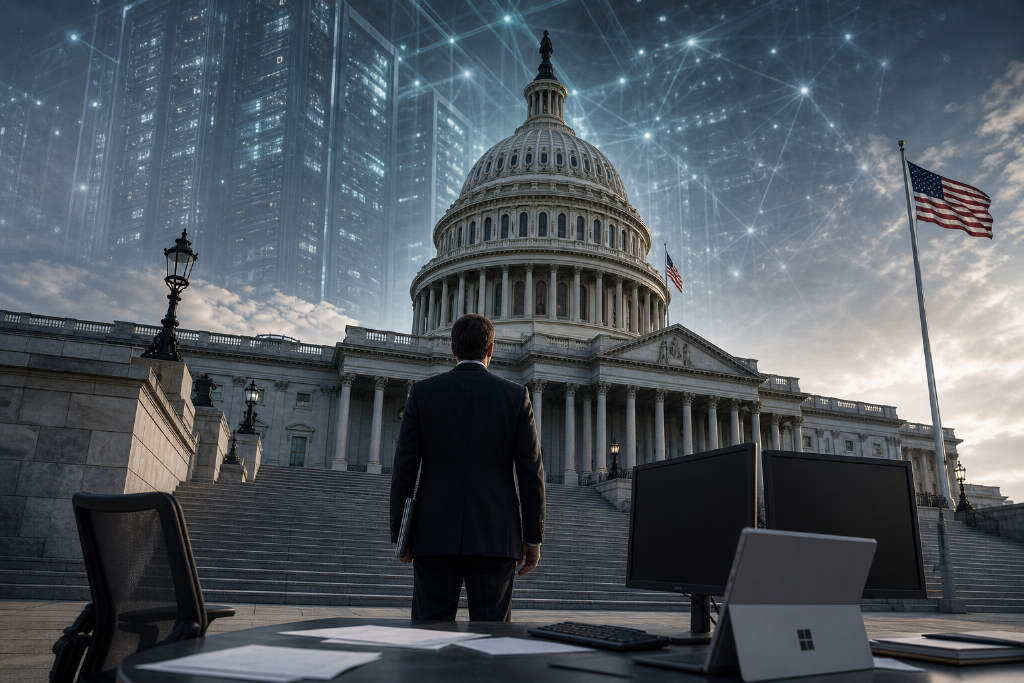
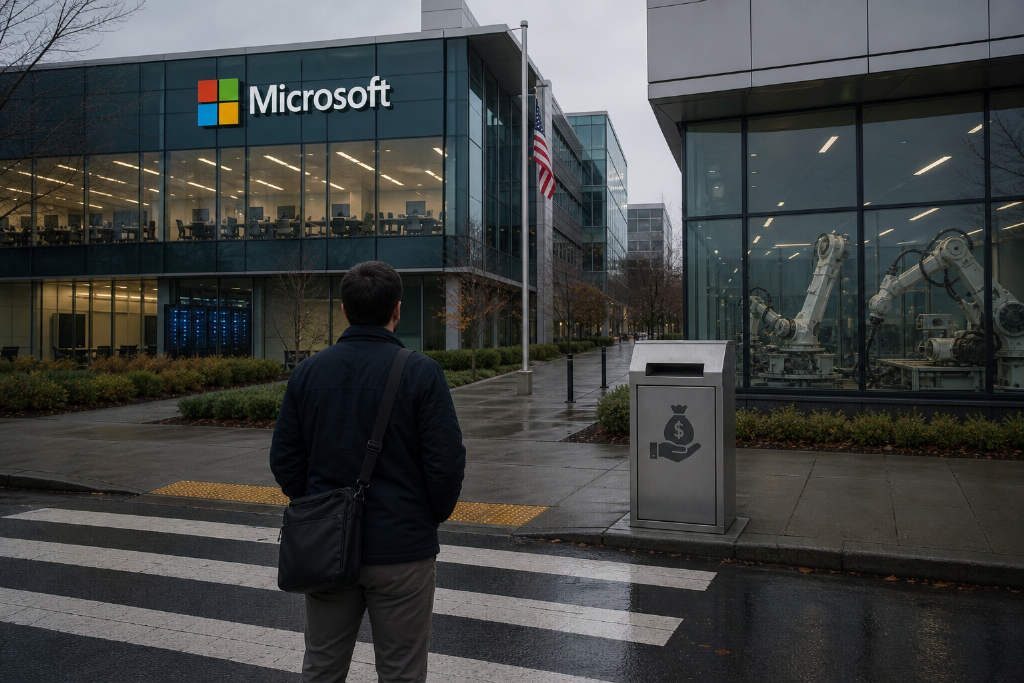
Microsoft co-founder Bill Gates said artificial intelligence may eventually create what he called "true abundance," but he expects society to go through roughly 20 years of severe disruption first. Speaking on The Verge's Decoder podcast with host Nilay Patel, Gates said the transition could rank among the most turbulent periods in human history, even if AI is managed well. He said both white-collar and blue-collar work will be reshaped. On the white-collar side, Gates pointed to jobs such as telemarketing, phone-based customer service, and accounting, arguing that AI could perform them more cheaply, faster, and in some cases more accurately. For blue-collar work, he pointed to humanoid robots and said future systems could build houses, grow food, and perform surgery if development is not significantly slowed or stopped. Gates also said work has long provided people with income, purpose, routine, social ties, and a path to solving problems. Activities such as art, sports, cooking, and parenting may be intentionally reserved for humans, he said, even if AI could do them better. In his view, that would be a matter of policy and social choice rather than a technical limit.

300
Bill Gates says AI could bring true abundance, but only after a 20-year period of upheaval
Bill Gates
1 months agoNews Editor

Bill Gates renews call for robot tax, says AI doing human jobs should face the same payroll tax

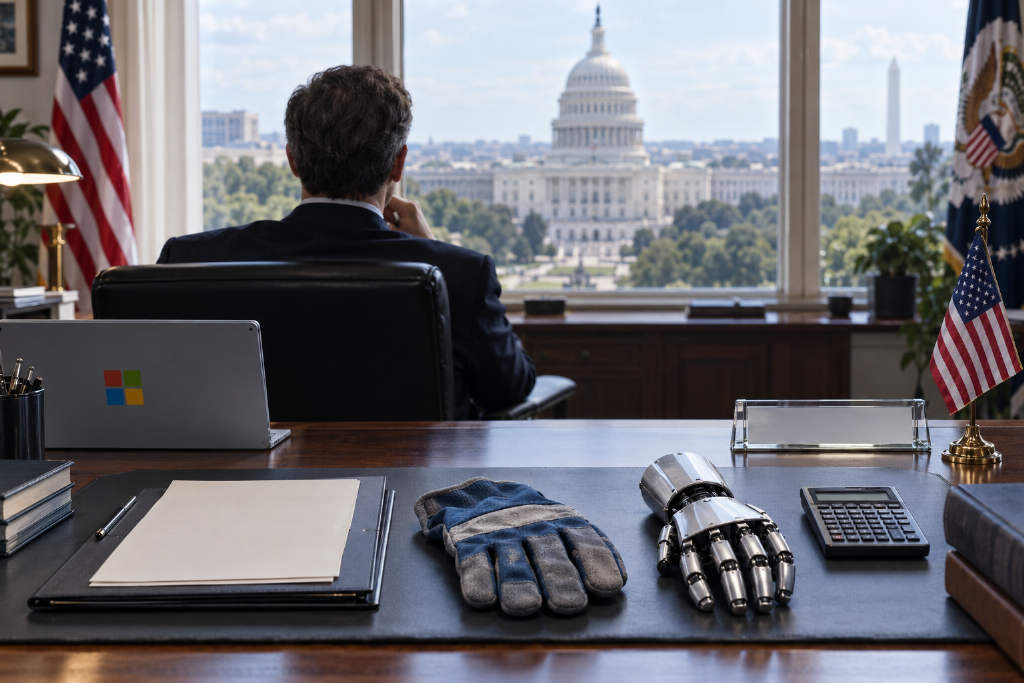
Microsoft co-founder Bill Gates has again argued that robots or AI systems replacing human workers should be taxed in the same way as people doing the same work. In an interview aired on Sept. 30 on the Ezra Klein Podcast, Gates said policymakers should define a "unit of labor" and apply the same Federal Insurance Contributions Act, or FICA, tax whether the task is carried out by a person or a machine. He said the idea would help preserve tax revenue while also supporting economic security for citizens affected by job displacement. The article explains that FICA is the U.S. payroll tax used to fund Social Security and Medicare, with both employees and employers contributing. Gates’ latest remarks build on a proposal he raised as early as 2016, though this time he outlined a more specific framework centered on labor units rather than taxing a robot as an object. The report also notes that on the same day Gates made the remarks, Republican members of the U.S. Senate formally introduced a cryptocurrency tax bill, placing AI taxation and crypto taxation side by side in the U.S. policy discussion for the second half of 2026.

590
Bill Gates renews call for robot tax, says AI doing human jobs should face the same payroll tax
Bill Gates
3 months agoNews Editor

Bill Gates warns AI could hit white-collar jobs within two years and calls for tougher oversight

Microsoft co-founder Bill Gates has adopted a much darker tone on artificial intelligence, saying the technology could start disrupting white-collar jobs within two years and both white- and blue-collar work within four. Gates laid out that view in a roughly 6,000-word memo published on August 26 on Gates Notes, then expanded on it in an interview the next day on The Atlantic’s podcast Radio Atlantic with senior editor Hanna Rosin. Gates said he was willing to stake his reputation on the view that "this time is different." He traced that shift to rapid gains in coding by AI models, singling out Anthropic’s Claude as one of the earliest examples. He also said two danger thresholds had already been crossed: cyberattacks and bioterrorism. In his account, current safeguards remain weak, with voluntary reviews lacking both clear standards and any defined remedy when systems fail. On policy, Gates argued that some occupations should remain human-reserved, cited childcare as one example for debate, and backed moving taxation away from labor and toward capital, including taxes on AI systems and robots. He also rejected the argument that tighter AI rules would simply hand an advantage to China, saying the U.S. has yet to present a credible regulatory framework that actually addresses the underlying risks.

1430
Bill Gates warns AI could hit white-collar jobs within two years and calls for tougher oversight
Bill Gates
3 months agoNews Editor

Bill Gates Revives Robot Tax Proposal and Calls for Human-Reserved Jobs in the AI Era

Bill Gates is again arguing that governments should tax automation more directly as artificial intelligence spreads through the economy. In a new essay, the Microsoft co-founder says the current tax structure favors machines over workers because employers pay payroll taxes on human labor while robots can often be written off as business expenses. His proposed fix includes a tax on AI tokens, the units used by language models to process text and other data, as well as a tax on robots themselves. The essay goes beyond tax policy. Gates also proposes a class of “Human Reserved” jobs that society would deliberately keep in human hands even when AI could technically perform them. He points to childcare and jury service as the clearest cases, while placing education and healthcare in a middle category where people would remain involved while using AI tools. Gates says this protected category could cover roughly 40% of jobs at the outer edge of the idea. He argues that AI-driven labor disruption may unfold much faster than earlier technological shifts, reaching legal work, customer service, medicine, software, and manufacturing within a decade. While recent labor data has not yet shown mass displacement, Gates says he is not waiting for that evidence before pushing for policy action.

790
Bill Gates Revives Robot Tax Proposal and Calls for Human-Reserved Jobs in the AI Era
Bill Gates
3 months agoNews Editor

Bill Gates warns AI is moving too fast, calls for robot taxes and protected human-only jobs

Bill Gates has issued one of his sharpest warnings yet on artificial intelligence, arguing that the technology could become either "the greatest equalizer in history" or a major source of unfairness if societies fail to prepare for its effects. In a new essay published on Aug. 26 local time, Gates said this is the first time he has encountered a new technology and wished it would develop more slowly. He proposed two unusually concrete responses: setting aside certain roles as protected areas for human workers even if AI can perform them, and considering taxes on AI tokens and robots to reduce incentives for replacing labor with machines. The essay spans a wide range of risks. Gates said entry-level jobs and early-career opportunities for young people could be squeezed first, while sectors including customer service, sales, software engineering, legal assistance, loan underwriting, data analysis and medical triage may face growing automation pressure. He also pointed to cybersecurity, biotechnology misuse, AI companions, education and deepfakes as areas requiring close scrutiny, and argued that AI governance cannot be left to tech companies alone. At the same time, Gates said he remains optimistic about AI’s ability to improve healthcare, agriculture and public services, including work by the Gates Foundation in AIDS, tuberculosis, malaria and malnutrition research.

1480
Bill Gates warns AI is moving too fast, calls for robot taxes and protected human-only jobs
Bill Gates
3 months agoNews Editor

Bill Gates says the turbulent AI era has arrived, calls for human-only jobs and a rethink on robot taxes

Bill Gates has struck a more cautious tone on artificial intelligence, saying the technology could become either "the greatest equalizer in history" or "the biggest source of unfairness." In a new essay published on Aug. 26 U.S. time, Gates said it was the first time he had encountered a new technology and wished it would develop more slowly. He argued that societies need time to prepare for social, political, and economic disruption, even as AI is unlikely to wait. The Microsoft co-founder focused much of his warning on jobs, especially entry-level roles for young workers. He said customer service, sales, software engineering, and legal assistant positions may be affected early, while loan underwriting, data analysis, and medical triage could follow as models improve. He also said falling robot costs and stronger AI could bring machine competition to some physical jobs in construction and hospitality around 2030. Gates also raised concerns about cybersecurity, biotechnology, education, AI companions, and governance. At the same time, he said AI still has strong potential in healthcare, agriculture, and public services. To deal with labor disruption, he proposed setting aside some roles that society chooses to keep human-led, even if machines can perform them, and considering taxes on AI- or robot-driven automation gains to help fund retraining and social support.

820
Bill Gates says the turbulent AI era has arrived, calls for human-only jobs and a rethink on robot taxes
OpenAI
5 months agoNews Editor

OpenAI Unveils AI Policy Proposals: Robot Tax, Four-Day Work Week, Public Wealth Fund, and More

OpenAI published a set of policy proposals to address the economic impact of AI on labor markets and wealth distribution. The four key initiatives include shifting taxes from labor to capital (robot tax), creating public wealth funds to distribute AI gains to all citizens, subsidizing a four-day work week without pay cuts, and accelerating energy infrastructure. The release coincides with a New Yorker exposé alleging CEO Sam Altman misled the board on safety protocols, leading to his brief ouster in 2023. Meanwhile, OpenAI shares are losing favor in secondary markets as investors pivot to rival Anthropic, citing cost concerns and slower enterprise adoption.

810
OpenAI Unveils AI Policy Proposals: Robot Tax, Four-Day Work Week, Public Wealth Fund, and More
OpenAI
5 months agoNews Editor

OpenAI Proposes Four Policies to Address AI Employment Impact: Robot Tax, Four-Day Workweek, Public Wealth Fund, and Infrastructure Acceleration

OpenAI has released a policy proposal suggesting a shift of tax burden from labor to capital, including a robot tax, a national public wealth fund, subsidies for a four-day workweek without pay cuts, and accelerated energy infrastructure expansion. Before the proposal, CEO Sam Altman faced a New Yorker exposé alleging deception on safety protocols, leading to his 2023 firing. Meanwhile, OpenAI's stock is losing favor in the secondary market as investors pivot to rival Anthropic.

1860
OpenAI Proposes Four Policies to Address AI Employment Impact: Robot Tax, Four-Day Workweek, Public Wealth Fund, and Infrastructure Acceleration
Total 10 items
Go topage